

Toxin Binders for Diarrhoea: Intestinal Adsorbents Guide
Chemically freezing your bowel motility might feel like the fastest route to relief, but immobilising the gut often traps harmful irritants inside. Sudden urgency, frequent loose stools, and exhausting abdominal cramps quickly derail your day. It's entirely reasonable to fear that conventional anti-motility drugs merely delay biological recovery by keeping offending triggers locked within your digestive system. Choosing an oral toxin binder for diarrhoea offers a clinically sound, drug-free alternative. Rather than paralysing your intestines, a physical intestinal adsorbent works alongside your body's natural clearance mechanisms to address the root trigger of irritation.
You'll discover how an oral toxin binder targets bacterial toxins to relieve acute diarrhoea and IBS-D safely without slowing natural bowel movement. We explain how this non-systemic approach shields the gut lining against leaky gut, reduces stool frequency, and calms sensitive digestive tracts without causing rebound constipation or stripping away essential nutrients. Here is your practical guide to restoring intestinal stability with gentle, proven care.
Key Takeaways
- Understand how an oral toxin binder for diarrhoea selectively captures harmful bacterial toxins rather than bacteria themselves, protecting gut barrier function without altering natural transit.
- Discover why physical intestinal adsorbents prevent the risks linked to anti-motility drugs, avoiding pathogen retention and unpleasant rebound constipation.
- Learn practical protocols for resolving acute digestive upsets, traveller's diarrhoea, and managing chronic IBS-D safely using structured 30-day courses.
- Master safe administration techniques, including the essential two-hour medication separation window and gentle, drug-free considerations for paediatric use.
What Is an Intestinal Toxin Binder for Diarrhoea?
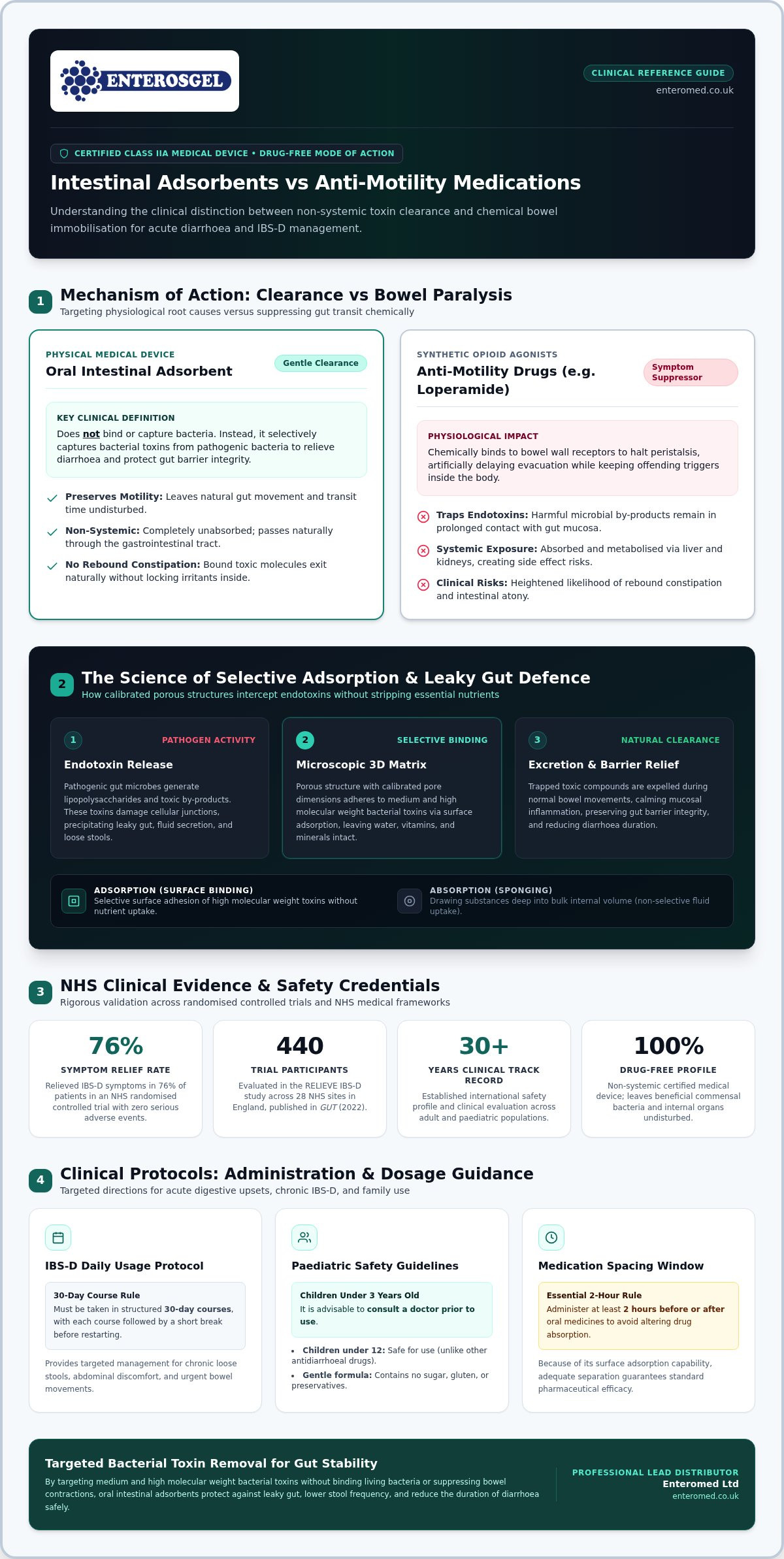
An oral intestinal adsorbent is a certified medical device engineered to clear harmful substances from the gastrointestinal tract. Acting as a physical toxin binder for diarrhoea, it operates mechanically without entering the bloodstream. A crucial clinical distinction is that it does not bind or capture bacteria directly. Instead, it targets and neutralises the toxic by-products, known as bacterial endotoxins, released by pathogenic microorganisms. These bound compounds are subsequently carried out of the digestive tract during a normal bowel movement, leaving natural gut motility undisturbed.
The Science of Adsorption Versus Absorption
While absorption draws substances deep inside a structure like a sponge soaking up liquid, adsorption functions through surface adhesion. The gel acts like a selective, microscopic net. Its porous, three-dimensional matrix features calibrated pore dimensions that capture medium and high molecular weight toxins, including bacterial lipopolysaccharides. Crucially, smaller vital molecules such as water, essential mineral salts, and vitamins pass through unaffected, keeping your hydration and nutritional balance intact.
How Bacterial Endotoxins Cause Acute Diarrhoea and Leaky Gut
Pathogenic gut microbes release aggressive toxins that irritate the delicate epithelial lining of the digestive tract. This toxic assault damages cellular junctions, precipitating leaky gut. In response to the mucosal injury, the colon secretes large volumes of fluid and electrolytes to flush out the threat, causing loose stools, urgency, and painful cramping.
Introducing an effective toxin binder for diarrhoea intercepts these damaging molecules within the intestinal lumen. Neutralising these compounds calms local inflammation, preserves the gut barrier, and effectively reduces both the duration of diarrhoea and the frequency of loose stools.
Intestinal Adsorbents Versus Anti-Motility Medications
Managing bowel distress effectively depends on whether you address the physiological cause or simply suppress symptom expression. Conventional anti-motility drugs, such as loperamide, act as synthetic opioid agonists. They bind to receptors in the bowel wall to chemically halt peristalsis. While this delays evacuation, freezing intestinal transit creates a distinct clinical concern: it traps microbial endotoxins and pathogens within the gut lumen, keeping harmful triggers inside the body.
The Mechanism of Action: Clearance Versus Bowel Paralysis
When gut movement stops, stagnant toxins remain in contact with the gut mucosa, prolonging irritation and elevating the risk of intestinal atony. Deploying a physical gut toxin binder supports natural clearance instead of drug-induced bowel paralysis.
Rather than interfering with muscular contractions or interrupting vagus nerve signalling, a physical adsorbent flows naturally through the digestive tract. It targets medium and high molecular weight bacterial toxins, binding them safely for excretion. This process reduces stool frequency without triggering the uncomfortable rebound constipation associated with chemical motility inhibitors.
Clinical Safety Profiles and Systemic Absorption
Systemic medications are absorbed into the bloodstream and broken down by the liver and kidneys. This bodily distribution frequently causes unwanted side effects, ranging from dizziness and dry mouth to central nervous fatigue.
In contrast, an inert mineral-organic medical device remains completely non-systemic:
- It passes entirely unabsorbed through the gastrointestinal tract.
- It leaves mucosal cells, beneficial commensal bacteria, and internal organs undisturbed.
- It safely leaves the body alongside captured toxic compounds during normal evacuation.
This non-absorbable structure makes an oral toxin binder for diarrhoea a gentle, drug-free option for vulnerable groups. If you manage recurring digestive sensitivity and want to examine the evidence behind physical enterosorption, you can review the published clinical research for detailed trial outcomes.
When to Use a Toxin Binder for Diarrhoea
Bacterial irritation presents distinct warning signs in the digestive tract. Frequent loose stools accompanied by sudden urgency, persistent flatulence, and lower abdominal cramping often indicate that microbial metabolites are irritating the mucosal lining. In such instances, using a certified toxin binder for diarrhoea provides targeted relief. Rather than dampening sensory nerve responses artificially, an oral adsorbent removes offending molecules before they overstimulate the intestinal lining.
Managing Chronic IBS-D and Abdominal Cramping
In irritable bowel syndrome with diarrhoea (IBS-D), low-grade mucosal inflammation frequently drives sensory hypersensitivity. Pathogenic bacterial toxins agitate mucosal nerve endings, overactivating the normal gastrocolic reflex and triggering urgent, post-meal evacuations.
For daily symptom control, official clinical guidelines instruct that Enterosgel should be taken in 30-day courses, with each course followed by a short break. Substantial clinical evidence supports this regimen: in the landmark 440-patient RELIEVE IBS-D trial across 28 NHS sites, published in GUT in 2022, 76% of patients achieved adequate relief of their symptoms, including noticeable reductions in stool frequency and abdominal pain. Explore these full trial outcomes on the Enteromed research portal.
Acute Gastroenteritis and Traveller’s Diarrhoea
Consuming unfamiliar food or water abroad often introduces foreign enterotoxigenic bacterial strains into the digestive tract. These pathogens release copious endotoxins that compromise mucosal permeability, provoking acute watery diarrhoea. Initiating treatment at the very first sign of bowel disturbance is vital. Binding free luminal toxins early shortens the illness episode and speeds recovery without halting your natural clearance cycle.
If you're planning an international journey or dealing with recurrent gastric flare-ups, consult the essential guide to traveller’s diarrhoea prevention. To keep your digestive system protected against unexpected acute episodes at home or away, explore the proven options available at enteromed.co.uk.
How to Take an Intestinal Adsorbent Safely and Effectively
Administering an oral toxin binder for diarrhoea correctly ensures maximum surface contact with luminal irritants. Squeeze the recommended dose of gel into a glass, add approximately 100 millilitres of room-temperature water, and stir thoroughly until a smooth suspension forms. Drinking the mixture promptly allows the porous matrix to disperse evenly through the stomach and small intestine. For household medicine cabinets, keeping a dedicated option like the Enterosgel 225g tube ready ensures you can act rapidly at the onset of symptoms.
Paediatric Guidelines and Safety for Young Children
Young digestive systems require gentle interventions that avoid systemic pharmaceutical chemicals. The formulation contains no sugar, gluten, or preservatives, making it exceptionally gentle for sensitive tummies. Unlike other antidiarrhoeal drugs, Enterosgel is safe for children under 12 years. For children under 3 years old, it is advisable to consult a doctor prior to use. Because the mineral gel passes through without entering the bloodstream, it offers reliable peace of mind for parents and carers.
Administration Timing and Practical Hydration Steps
Timing is critical when using a toxin binder for diarrhoea alongside other daily treatments. Because the gel adsorbs compounds physically based on molecular size, you must leave a clear window of 1 to 2 hours before or after taking oral prescription medications or eating meals. This spacing prevents the adsorbent from inadvertently capturing the active compounds in your standard medicines.
Remember that binding luminal toxins does not replace lost fluids. Always combine therapy with regular sips of water or oral rehydration salts to restore essential electrolytes. While most episodes settle rapidly, seek advice from an NHS general practitioner immediately if you experience severe symptoms, including persistent high fever, blood or mucus in the stool, or unmanageable dehydration.
Take Control of Digestive Recovery with Targeted Adsorption
Managing sudden gut distress does not require chemical bowel paralysis. Relying on a proven toxin binder for diarrhoea allows your body to eliminate irritating bacterial endotoxins naturally, protecting mucosal integrity without slowing bowel transit or causing rebound constipation. Backed by over 30 years of established clinical safety as a non-systemic medical device, this physical method remains gentle on the gut. In the landmark 440-patient NHS randomised controlled trial, 76% of patients achieved significant symptom relief across both stool frequency and abdominal pain.
Because the purified formulation is entirely free from sugar, gluten, preservatives, and synthetic anti-motility drugs, it offers dependable care for the whole family. You don't have to let bowel urgency dictate your daily routine. Order Enterosgel 225g Tube for Clinically Proven Diarrhoea Relief to restore intestinal stability and reclaim lasting digestive confidence.
Frequently Asked Questions
How does an intestinal toxin binder stop diarrhoea without medication?
An oral intestinal adsorbent acts as a physical medical device rather than a pharmaceutical drug. It does not bind bacteria directly; instead, it captures bacterial toxins released by pathogenic organisms that irritate the mucosal barrier and trigger fluid secretion. By neutralising these irritating molecules, a toxin binder for diarrhoea reduces the duration of diarrhoea and the number of loose stools, passing safely out of your digestive system during natural bowel movements.
Can an intestinal adsorbent capture beneficial gut bacteria or nutrients?
No, a certified intestinal adsorbent won't deplete your essential nutrients or disrupt healthy microflora. The porous matrix is physically calibrated to target medium and high molecular weight compounds, such as bacterial endotoxins. Smaller vital molecules, including vitamins, electrolytes, and water, move through freely without being trapped. Because beneficial commensal bacteria are cellular organisms far larger than the matrix pores, your microbiome remains completely protected throughout treatment.
Is an intestinal toxin binder safe for young children under 12 years?
Yes, unlike other antidiarrhoeal drugs, Enterosgel is safe for children under 12 years. It provides a gentle option for children because it contains no sugar, gluten, or preservatives. For children under 3 years old, it is advisable to consult a doctor prior to use. Since the gel operates physically and avoids systemic absorption, it gently relieves symptoms without putting metabolic strain on developing organs.
How should I take an intestinal adsorbent alongside regular prescription medication?
You should always leave an interval of 1 to 2 hours before or after taking oral prescription medicines. Because an adsorbent binds substances via surface adhesion based on molecular size, taking it simultaneously with medication could reduce the therapeutic absorption of your prescriptions. Spacing your doses ensures your regular medicines enter the bloodstream as intended, whilst allowing the adsorbent to work effectively within the intestinal lumen.
How long does it take for a gut toxin binder to relieve acute diarrhoea?
Relief typically begins within hours of the first dose as the gel disperses through the digestive tract. Clinical data demonstrates that adding an adsorbent to standard rehydration significantly reduces stool frequency and shortens illness duration compared to rehydration alone. Using a toxin binder for diarrhoea at the first onset of loose stools prevents endotoxins from inflicting further mucosal damage, accelerating recovery and helping your bowel settle much faster.
Can I use an intestinal adsorbent for ongoing irritable bowel syndrome?
Yes, an intestinal adsorbent is suitable for managing chronic IBS-D symptoms like sudden urgency, abdominal pain, and loose stools. Regarding the treatment of IBS-D symptoms and daily usage, the product should be taken in 30-day courses, with each course followed by a short break. This cyclical regimen clears recurring bacterial toxins that irritate the gut lining, helping rebuild mucosal stability and providing sustained digestive relief over time.
Share this article