

Traveller’s Diarrhoea: Best Travel Remedies for 2026
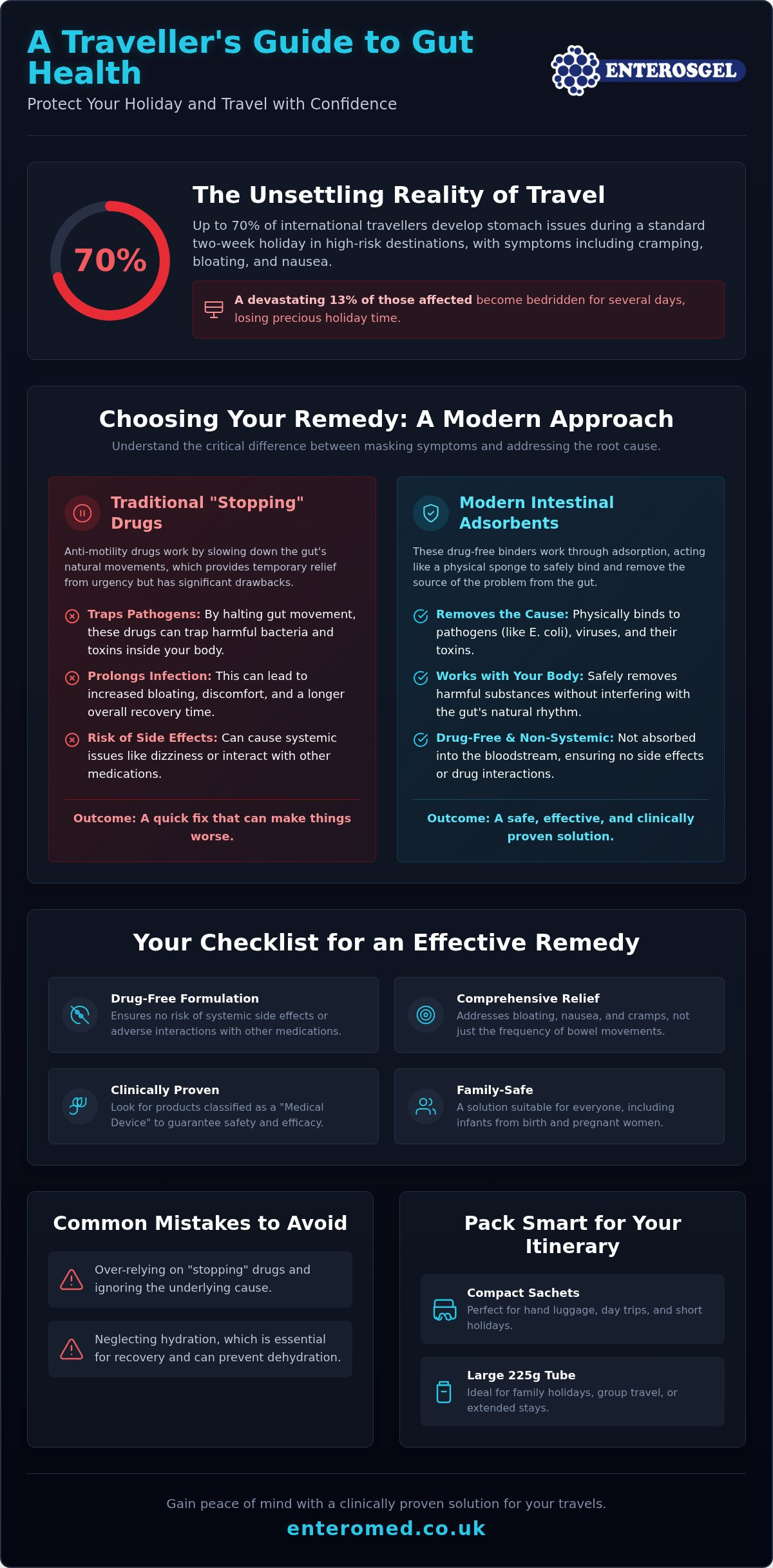
Did you know that up to 70% of international travellers develop stomach issues during a standard two-week holiday? It's an unsettling statistic that highlights the clinical reality of visiting high-risk destinations. For many, the fear of traveller’s diarrhoea ruining a long-awaited trip is a significant source of anxiety. Approximately 13% of those affected find themselves bedridden for several days, which is a devastating outcome when you've invested significant time and money into your journey.
We understand that choosing the right remedy is often confusing, especially when you're weighing up traditional medicated options against modern, drug-free alternatives. This guide simplifies that process. You'll discover how to select the most effective, travel-friendly treatment to manage traveller’s diarrhoea and protect your gut health whilst abroad. We'll examine the latest clinically proven remedies for 2026, focusing on compact solutions like intestinal adsorbents that fit easily into your hand luggage. This ensures you have a reliable, professional-grade tool ready to neutralise pathogens and restore your comfort quickly, giving you the confidence to enjoy every moment of your trip.
Key Takeaways
- Learn to identify the common causes of traveller’s diarrhoea and why physical removal of pathogens is more effective than simply slowing bowel movements.
- Understand the benefits of drug-free, non-systemic treatments that avoid the risk of side effects or interactions with other medications whilst you travel.
- Discover the best Enterosgel format for your itinerary, from compact sachets for flight hand luggage to the 225g tube for extended stays or larger groups.
- Avoid common pitfalls like over-reliance on "stopping" drugs and neglecting hydration, which can prolong recovery times during your holiday.
- Gain peace of mind with a clinically proven solution that is safe for the entire family, including infants from birth, ensuring everyone stays protected.
Understanding Traveller’s Diarrhoea and the Need for Fast Relief
Traveller’s diarrhoea remains the most frequent health problem for international voyagers. Clinically, it's defined by the passage of three or more unformed stools within a 24-hour period, often accompanied by abdominal distress. In 2026, despite advances in global hygiene, the condition continues to affect between 30% and 70% of travellers depending on their destination. Most cases originate from consuming contaminated food or water in areas with deficient Water, Sanitation, and Hygiene (WASH) infrastructure. For a comprehensive overview of traveler's diarrhea, including its global prevalence and typical triggers, medical resources provide extensive data on how these environmental factors impact gut health.
The core symptoms are unmistakable. Sudden urgency. Painful cramping. Persistent bloating. Nausea. These physical signals indicate that your digestive system is under attack. When treating traveller’s diarrhoea, responding promptly is vital, not just to save your holiday itinerary, but to prevent the onset of severe dehydration. Rapid loss of fluids and electrolytes can lead to exhaustion, requiring medical intervention that could have been avoided with early treatment.
The Mechanism of Infection
Pathogenic bacteria, such as E. coli, are responsible for approximately 75% to 90% of cases. These microorganisms, alongside viruses and protozoa, attach to the intestinal lining and release harmful toxins. The body's natural defence mechanism is to increase fluid secretion into the gut to flush these invaders out. Whilst this response is protective, it results in the watery stools and urgency associated with the condition. Integrating effective travellers diarrhoea prevention strategies is the first line of defence, yet even the most cautious travellers can be exposed to pathogens in high-risk regions.
Why Traditional Remedies May Fall Short
Many travellers rely on anti-motility drugs to "stop" the gut. These medications work by slowing down the physical movement of the intestines. Whilst this provides temporary relief from urgency, it often traps the underlying bacteria and toxins inside the body. This can prolong the infection and lead to increased bloating or discomfort. In contrast, a modern gut toxin binder acts like a physical sponge. It works through adsorption, binding directly to pathogens and toxins to safely remove them from the system. This approach addresses the root cause of the irritation without interfering with the natural rhythm of your digestive tract.
Key Features to Compare in a Travel Diarrhoea Remedy
Selecting a treatment for traveller’s diarrhoea requires a shift from seeking a "quick fix" to prioritising comprehensive gut management. Many travellers reach for the first available option on a pharmacy shelf without assessing how the treatment interacts with their body. A superior remedy should prioritise a drug-free formulation. This approach prevents the risk of systemic side effects, such as dizziness or secondary constipation, and ensures there are no adverse interactions with existing medications you might be taking for other health conditions.
According to an authoritative source from Johns Hopkins Medicine, symptoms can range from mild discomfort to severe dehydration, making it essential to find an "all-in-one" solution. Effective management shouldn't only target the frequency of bowel movements. It must also address the painful bloating, nausea, and abdominal cramps that often accompany the condition. By choosing a treatment with a broad mechanism of action, you ensure comprehensive relief rather than just a temporary pause in symptoms.
Verifying the regulatory status of a product is equally important for guaranteed quality. Look for treatments classified as a "medical device" with proven clinical validation. This status indicates that the product has undergone rigorous testing and meets high standards for safety, providing a level of certainty that is often missing from generic supplements. For those preparing their medical kit, exploring clinically proven intestinal adsorbents can help identify these high-performance options before you depart.
Adsorption vs. Absorption: The Technical Edge
Adsorption is the physical binding of toxins, viruses, and bacteria to a surface rather than being soaked up into a substance. This physical method is significantly gentler on the digestive system because it doesn't rely on chemical reactions that can irritate the gut lining. Because the treatment is not absorbed into the bloodstream, it remains entirely within the intestinal tract, performing its function and then passing out of the body naturally with the bound pathogens. This "physical sponge" approach provides a safe, non-systemic way to clear the gut of the triggers causing distress.
Suitability for Vulnerable Travellers
Family holidays require remedies that are safe for everyone, from infants to the elderly. Drug-free options are particularly preferred for vulnerable travellers or those with sensitive systems, as they avoid the harsh chemicals found in traditional anti-diarrhoeals. It's vital to select a remedy that is free from sugar, gluten, and preservatives to prevent further irritation or allergic reactions. Having a paediatric-safe option, such as Enterosgel Kids 0+, ensures that even the youngest family members can receive fast, reliable relief without the risks associated with adult-strength medications.
Comparing Enterosgel Formats: Sachets vs. Tubes for Your Trip
Preparation is the cornerstone of effective gut management abroad. When planning for a high-risk destination, selecting the right packaging is as important as the treatment itself. The CDC traveller's diarrhoea guidelines emphasise that being equipped with a standby treatment is essential for international travel. Enterosgel provides flexibility through its sachet and tube formats, both of which maintain a stable shelf life of up to three years when stored correctly below 25°C. This ensures your medical kit remains ready for multiple trips across different seasons.
The Convenience of Travel Sachets
Enterosgel Travel Sachets (Pack of 10) are specifically designed for the modern voyager. These 15g single-use packets are the preferred choice for flight hand-luggage. They fit easily into clear liquid bags and bypass the bulk of traditional medicine bottles. During transit, whether you are on a long-haul flight or a cross-border train, the "ready-to-use" nature of sachets is invaluable. There is no need for measuring spoons or guesswork. Each pre-measured dose ensures accuracy whilst on the move, allowing you to address symptoms of traveller’s diarrhoea the moment they arise.
When to Choose the 225g Tube
For extended stays or group travel, the Enterosgel 225g Tube offers a more comprehensive solution. It is highly cost-effective for families or those spending several weeks in regions with high attack rates. The tube format allows for variable dosing. If symptoms are persistent or severe, a larger volume of the adsorbent gel can be dispensed easily. This format is ideal for keeping in a hotel first-aid kit or a backpack during day trips. It provides a high-performance reservoir of treatment that can be shared amongst multiple people if a local outbreak occurs.
Specialist Care with Enterosgel Kids
Managing gut health in infants and toddlers requires a gentle, specialised approach. Enterosgel Kids 0+ is specifically formulated to meet these needs, offering the same clinical efficacy in a format that parents can trust. The gel is completely tasteless. It can be mixed effortlessly with water, breast milk, or formula, making it simple to administer to younger children who might resist traditional medications. Using a clinically proven paediatric medical device provides the professional reassurance that your child’s recovery is being managed with a safe, non-allergenic tool that does not enter their bloodstream.
Common Mistakes to Avoid When Managing Gut Health Abroad
Many travellers approach gut health with a reactive mindset, waiting for symptoms to become debilitating before intervening. This delay is a critical error. In high-risk regions, an estimated 10 million international travellers develop diarrhoea annually. Waiting until you are confined to your hotel room often means the infection has already caused significant intestinal inflammation. Another common oversight is focusing purely on "stopping" the flow whilst neglecting fluid replacement. Oral rehydration is the clinical cornerstone of recovery. Without it, your body cannot effectively process the pathogens causing the distress and you risk prolonged exhaustion.
Logistical errors also play a role in poor outcomes. Packing bulky, liquid-heavy bottles often leads to leaks in luggage or, more frustratingly, confiscation at airport security. This leaves you vulnerable during the most critical part of your journey: the arrival and transit to your accommodation. Ensure your medical kit is compact, sachet-based, and compliant with flight regulations to avoid being caught without a solution when you need it most.
The Myth of "Just One Pill"
There is a widespread belief that a single dose of anti-motility medication is a "cure" for traveller’s diarrhoea. It isn't. These drugs merely paralyse the gut to prevent movement, which can trap harmful pathogens and their toxins inside your system. This often leads to secondary bloating and a longer recovery period because the underlying cause remains unaddressed. To truly clear the infection, you need a full course of treatment that supports the body's natural expulsion process. This is where intestinal adsorbents provide a distinct advantage. They work physically to bind and remove the root cause of the irritation rather than just masking the symptoms through chemical suppression.
Preparation Before You Fly
Smart travel management begins before you leave the tarmac. Starting a gut health regime a few days before departure can help stabilise your intestinal environment and prepare your system for dietary changes. Always keep a remedy immediately available in your day bag or seat-back pocket. Symptoms can strike during transit, and having access to a treatment that holds "Medical Device" status ensures you are using a tool with guaranteed clinical safety and performance. To ensure you are fully prepared for your next trip, view our clinically proven traveller’s diarrhoea solutions for fast, reliable relief.
Why Enterosgel is the Essential Travel Companion for 2026
As international travel continues to evolve in 2026, the need for reliable, high-performance healthcare solutions has never been greater. Enterosgel stands out as a versatile, family-safe remedy that addresses the unpredictable nature of gut health abroad. Its primary strength lies in its drug-free, non-systemic mechanism. Unlike medications that enter the bloodstream or chemically alter your body's natural processes, this intestinal adsorbent remains entirely within the gut. It acts as a physical barrier, binding to pathogens and toxins before they can cause further damage. This medical-first approach provides a sense of stability and smart protection, ensuring that traveller’s diarrhoea doesn't dictate the pace of your holiday.
Before you depart, it's essential to assemble a comprehensive travel health kit. This proactive step ensures you can manage symptoms the moment they appear, preventing minor irritations from escalating into severe dehydration. Use this final checklist to ensure your kit is complete:
- Enterosgel Travel Sachets (Pack of 10) for immediate use during transit and day trips.
- Enterosgel 225g Tube for long-term protection and group use at your accommodation.
- Oral Rehydration Salts (ORS) to maintain electrolyte balance whilst recovering.
- Alcohol-free hand sanitiser and antiseptic wipes for hygiene in WASH-deficient areas.
- A digital thermometer to monitor for fever or secondary infections.
The Clinically Proven Choice
Expertise and validation are the hallmarks of a trustworthy medical solution. The Enterosgel range is backed by over 30 years of clinical use and rigorous scientific research. It's a high-performance tool that offers more than just simple diarrhoea relief. By adsorbing toxins, it effectively reduces the pressure and inflammation that cause painful bloating and abdominal cramps. This makes it a comprehensive choice for those who want to restore their digestive comfort quickly and safely. We invite you to browse our Traveller’s Diarrhoea collection to find the specific format that fits your travel style.
Final Buying Recommendation
Choosing the right format depends on your specific itinerary. If you are a solo traveller or a frequent flyer, the sachets offer unparalleled convenience and hand-luggage compliance. For families or those staying in high-risk regions for more than a week, the 225g tube provides superior value and flexibility. Parents should always include Enterosgel Kids 0+ in their family first-aid kit to ensure that even the youngest travellers have access to safe, drug-free relief. Don't leave your holiday health to chance. Shop the full Traveller’s Diarrhoea range here and travel with the confidence that you are protected by a clinically validated specialist.
Securing Your Gut Health for Future Adventures
Protecting yourself against traveller’s diarrhoea requires a shift from reactive symptom masking to proactive gut management. By choosing a physical adsorbent rather than a traditional anti-motility drug, you ensure that harmful toxins are safely removed from your system rather than trapped inside. This clinical approach addresses the root cause of distress whilst maintaining your body's natural rhythm. It's the difference between a temporary pause in symptoms and a genuine recovery that keeps your holiday itinerary on track.
Enterosgel provides a professional-grade solution that is drug-free, non-allergenic, and safe for the entire family from birth. Recommended by healthcare professionals and clinically proven for over 30 years, it offers the stability and reassurance you need when exploring new destinations. Whether you prefer the compact convenience of travel sachets for your hand luggage or the cost-effectiveness of a 225g tube for longer stays, preparation is your most powerful tool. Browse the Traveller’s Diarrhoea Collection for your next trip and take the first step towards a worry-free journey. Your health is your most valuable travel asset; don't leave it to chance.
Frequently Asked Questions
Is Enterosgel safe to take on a plane in my hand luggage?
Yes, Enterosgel is safe for hand luggage. Each individual sachet contains 15g of gel, which is well below the standard 100ml liquid limit imposed by airport security. You should place the sachets in your clear, resealable plastic bag alongside other liquids. For those carrying the 225g tube, this must be placed in your checked-in hold luggage to comply with international aviation safety regulations.
How quickly does Enterosgel work for traveller’s diarrhoea?
Most users experience a reduction in urgency and abdominal discomfort within 1 to 2 hours of the first dose. Because the gel works through a physical mechanism called adsorption, it begins binding to pathogens immediately upon entering the intestinal tract. For acute cases of traveller’s diarrhoea, it's recommended to follow the specific dosage instructions on the packaging to ensure the gut is fully cleared of harmful toxins.
Can I take Enterosgel with other travel medications?
You can use Enterosgel alongside other medications, provided you observe a two-hour window between doses. As an intestinal adsorbent, the gel is designed to bind to substances in the gut, which could include other oral medicines if taken simultaneously. To ensure your other travel medications, such as malaria prophylaxis or heart medicine, remain fully effective, always take them at least two hours before or after consuming the gel.
Is Enterosgel suitable for babies and toddlers during travel?
Yes, Enterosgel is entirely appropriate for infants and young children. The Enterosgel Kids 0+ variant is specifically designed for paediatric use, providing a safe, drug-free option for managing digestive distress during family holidays. Because it's non-allergenic and is not absorbed into the bloodstream, it's exceptionally gentle on developing systems. Parents can easily mix the tasteless gel into formula, breast milk, or water for stress-free administration.
How many sachets should I pack for a two-week holiday?
We recommend packing at least two packs of Enterosgel Sachets (20 sachets total) for a standard two-week holiday to manage potential traveller’s diarrhoea in high-risk regions. Whilst a single pack of 10 is often sufficient for one person, having a surplus ensures you're prepared for persistent symptoms or can assist a travel companion. If you're travelling as a family, the 225g tube provides a more economical solution for your shared medical kit.
Does Enterosgel need to be kept in a refrigerator whilst travelling?
No, Enterosgel doesn't require refrigeration whilst you're travelling. It should be stored at a temperature below 25°C and away from direct sunlight to maintain its physical structure and efficacy. It's important to ensure the gel doesn't freeze, as this can damage the adsorbent particles. Keeping the sachets or tube in a cool, shaded part of your backpack or hotel room is perfectly sufficient for most climates.
What is the difference between Enterosgel and standard diarrhoea tablets?
Standard diarrhoea tablets usually work by suppressing gut motility, which effectively "freezes" the intestines to stop movement. Enterosgel works differently by using a physical adsorption process to bind and remove the toxins, bacteria, and viruses causing the irritation. This means the underlying cause of the infection is cleared from the body rather than being trapped inside. It provides a more comprehensive recovery without the risk of secondary constipation or systemic side effects.
Can Enterosgel help with bloating and stomach cramps as well?
Yes, the gel is highly effective at relieving bloating and stomach cramps. These symptoms are often caused by gases and toxins produced by harmful bacteria in the gut. By physically binding these substances and removing them from the digestive tract, the gel reduces internal pressure and inflammation. This results in a significant decrease in abdominal pain and that uncomfortable feeling of fullness, allowing you to return to your holiday activities more comfortably.
Share this article