

Clinically Proven IBS Relief: Evidence-Based Guide 2026
Why settle for "trending" gut health fads when your digestive comfort deserves the certainty of clinical evidence? Chronic abdominal pain. Unpredictable bowel urgency. Persistent bloating. These aren't just minor inconveniences; they're disruptive symptoms that dictate your work life and social choices. If you're searching for clinically proven IBS relief, it's likely because you're exhausted by "miracle" supplements that lack the scientific backing required for genuine medical confidence.
We understand that you're looking for more than a temporary fix. You need a reliable, evidence-based strategy. This guide details the rigorous standards behind effective treatment, focusing on solutions validated through formal UK trials. We'll explain why masking symptoms isn't enough and how a "medical-first" approach can provide the stability you've been searching for.
By exploring the mechanism of intestinal adsorption, you'll learn how a drug-free medical device acts like a "smart" sponge to physically cleanse your gut of inflammatory triggers. We'll preview the latest research and show you how to achieve fast relief from diarrhoea whilst maintaining long-term safety for the whole family. It's time to move beyond guesswork and embrace a medically recognised pathway to gut health.
Key Takeaways
- Understand the rigorous UK clinical standards and NICE guidelines that define authentic, evidence-based treatments for Irritable Bowel Syndrome.
- Learn how intestinal adsorption acts as a "smart" physical mechanism to trap and remove bacterial toxins and pathogens from the gut.
- Discover why a drug-free approach provides clinically proven IBS relief by addressing the underlying triggers of diarrhoea and bloating rather than just masking symptoms.
- Compare the efficacy of traditional medications, such as anti-spasmodics and loperamide, against the targeted action of medical-grade adsorbents.
- Master the practical application of the Enterosgel 225g Tube to manage acute flare-ups and maintain long-term digestive stability safely.
Understanding the Standards of Clinically Proven IBS Relief
In the UK, the term "clinically proven" carries significant weight. It isn't a casual marketing claim. For a treatment to be recognised as providing clinically proven IBS relief, it must undergo rigorous testing that meets the standards of the National Institute for Health and Care Excellence (NICE). Many high-street gut health solutions focus on simple symptom suppression. Whilst this might offer temporary comfort, it often fails to address the underlying triggers of inflammation. Choosing an evidence-based programme ensures that your management strategy is grounded in scientific reality rather than anecdotal trends.
The Clinical Trial Gold Standard
Reliable IBS research relies on the "gold standard": double-blind, placebo-controlled studies. These trials ensure that the results observed are due to the treatment itself rather than the placebo effect. When evaluating evidence, look for:
- Peer-reviewed publication: Validation by independent experts in gastroenterology.
- UK-based trials: Data specific to the UK population and healthcare standards.
- Safety data: Evidence that the treatment is safe for long-term use across all ages.
For those seeking transparency, reviewing Enterosgel research and clinical evidence reveals how specific study outcomes validate the safety and efficacy of intestinal adsorbents. This level of data is essential for long-term management, especially when considering treatments for vulnerable groups or children.
Medical Device vs. Pharmaceutical Interventions
The distinction between a medical device and a pharmaceutical drug is fundamental to your recovery journey. Most IBS medications are drugs that enter the bloodstream to chemically alter bodily functions. In contrast, certain treatments are classified as medical devices because they use a physical mechanism of action. They don't interfere with your body's chemistry. Instead, they work like a "smart" filter, trapping bacterial toxins and pathogens before they can cause distress. The UK regulatory framework ensures these devices meet strict performance and safety criteria, offering a high-performance healthcare tool that remains gentle on the system. By removing the cause of irritation rather than just silencing the pain, you achieve a more stable form of clinically proven IBS relief.
The Science of Intestinal Adsorption for Symptom Management
Understanding the biophysics of gut health is the first step toward achieving clinically proven IBS relief. Many patients confuse the terms "absorption" and "adsorption," yet the difference is vital for effective treatment. Absorption is a chemical process where substances enter the bloodstream. Adsorption, conversely, is a physical mechanism. Think of it as a "smart" magnet. Instead of being soaked up by the body, an adsorbent attracts and binds harmful irritants to its surface whilst passing through the digestive tract entirely unabsorbed.
When bacterial toxins and pathogens linger in the gut, they provoke the immune system and cause inflammation. This reaction is what leads to the cramping, bloating, and diarrhoea that define the IBS experience. By physically trapping these triggers, intestinal adsorbents reduce the toxic load on your gut lining. This drug-free approach ensures that the treatment doesn't interfere with your body's systemic chemistry, significantly reducing the risk of side effects. For a deeper scientific dive, you can explore our clinical guide to Gut Toxin Binders.
Removing Bacterial Toxins and Pathogens
IBS flare-ups amongst UK patients are frequently linked to an overgrowth of harmful pathogens or the presence of specific bacterial toxins. These irritants damage the delicate intestinal barrier, leading to increased sensitivity and pain. By binding these substances, clinical adsorbents prevent them from entering the systemic circulation or migrating further into the digestive system. You can read more on removing bacterial toxins from the gut to see how this physical removal differs from traditional symptom masking.
Protecting the Gut Microbiome
A common concern with gut treatments is whether they'll harm "good" bacteria. Clinical adsorption is highly selective. The physical structure of high-performance adsorbents is designed to target larger molecules, such as toxins and pathogens, whilst leaving the smaller, beneficial gut flora undisturbed. This ensures you're maintaining a healthy intestinal environment whilst treating active symptoms. If you're looking for a reliable way to manage daily symptoms, the Enterosgel 225g Tube provides a clinically validated solution that supports your microbiome's natural balance.
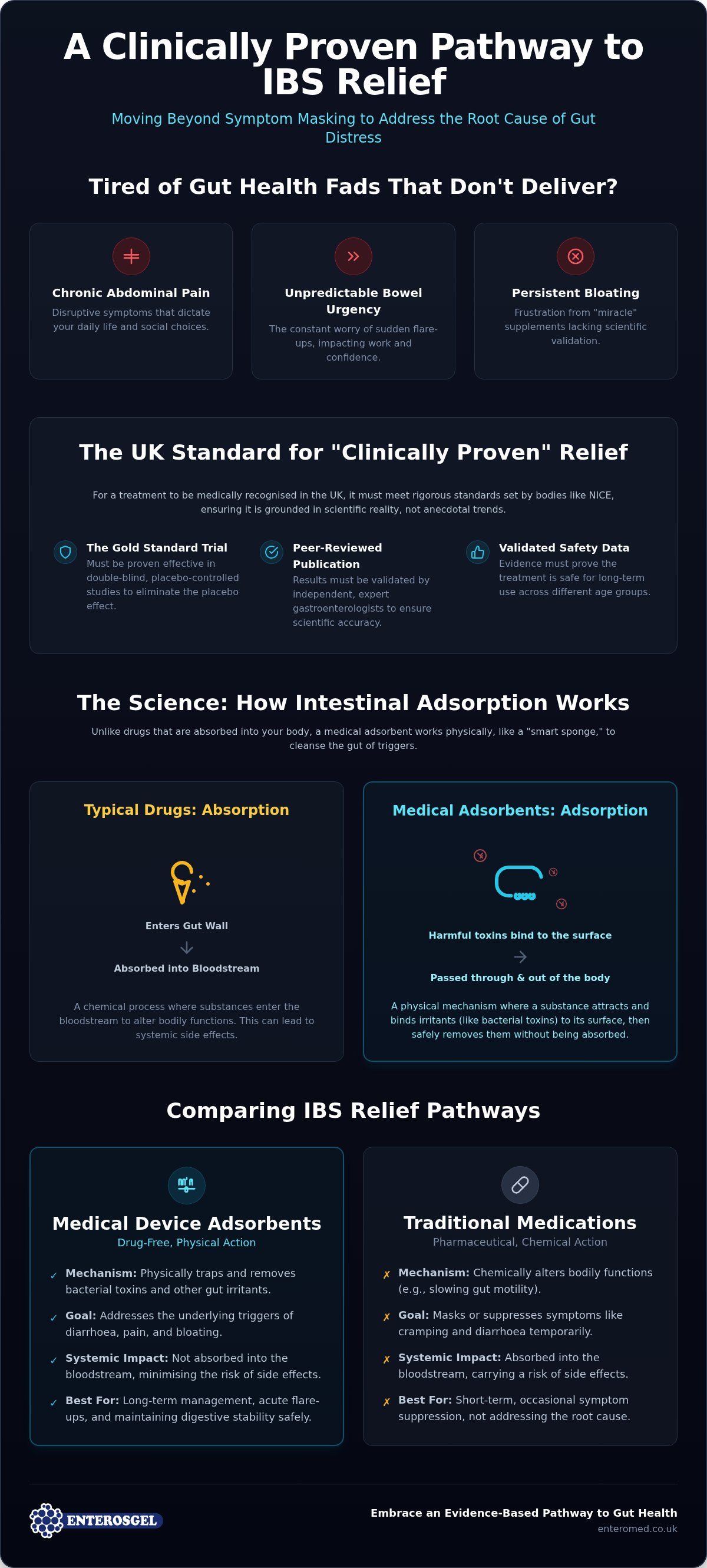
Comparing IBS Relief Pathways: Adsorbents vs. Traditional Medications
Traditional IBS treatments often rely on pharmacological intervention to manage symptoms. Anti-spasmodics, for instance, focus on relaxing the smooth muscles of the gut to ease cramping. Whilst they provide relief for pain, they typically don't address bowel urgency or the underlying toxic triggers. Loperamide, a common anti-motility drug, works by slowing down intestinal movement. This is effective for stopping diarrhoea, but it can inadvertently trap harmful toxins within the digestive tract. This often leads to a "rebound" effect, where patients experience uncomfortable constipation after the initial flare-up is suppressed.
In contrast, medical device adsorbents offer a local, physical action. Because these substances aren't absorbed into the bloodstream, they avoid the systemic side effects common with chemical drugs. This makes them a preferred choice for those seeking clinically proven IBS relief without the risk of long-term pharmaceutical dependency. By physically removing irritants rather than just silencing the body's response, you achieve a more stable and predictable recovery.
Addressing IBS Urgency and Diarrhoea
For many patients, urgency is the most debilitating symptom of IBS-D. Adsorbents provide clinically proven IBS relief by binding the excess liquid and bacterial irritants that trigger sudden bowel movements. The speed of action is a critical factor during an acute flare-up. Gels often provide faster relief than traditional tablets because they are already in a hydrated state. This allows the treatment to begin coating the intestinal lining and trapping pathogens immediately upon ingestion, offering a sense of security that tablet-based medications may lack.
Managing Bloating and Abdominal Pain
Bloating is frequently the result of gas produced by bacterial fermentation in the gut. Traditional remedies might use simeticone to break down gas bubbles, but this only treats the surface-level symptom. Clinical adsorbents take a more thorough approach by physically binding gas molecules and the specific bacteria producing them. This reduces internal pressure at the source. This methodical approach is detailed in our clinical guide to intestinal adsorbents for diarrhoea and pain. For those ready to move away from systemic drugs, the Enterosgel 225g Tube offers a targeted, drug-free alternative for daily symptom control.
Integrating Enterosgel into Your Clinical IBS Management Strategy
Moving beyond understanding the science requires a structured application. The Enterosgel 225g Tube serves as the foundation for this practical approach. It's a versatile tool for both sudden flare-ups and steady, long-term management. For acute symptoms, the standard adult dosage is typically one tablespoon taken three times daily. Once stability is achieved, you can transition to a maintenance programme to keep symptoms at bay. This ensures you maintain clinically proven IBS relief whilst allowing your digestive system the space to recover from chronic irritation.
Safe Usage for the Whole Family
Safety is paramount in clinical care. Enterosgel is unique because it isn't absorbed by the body, making it suitable for even the most vulnerable users. It's safe for babies and children from birth (0+), providing a reliable solution for paediatric gut discomfort. Clinical safety notes also confirm it's appropriate for use whilst pregnant or breastfeeding, as the gel remains entirely within the intestinal tract. To ensure adherence, simply mix the tasteless gel into water or a clear liquid. It fits seamlessly into a morning routine, providing a protective layer before your day begins.
Long-Term Gut Health Maintenance
True recovery involves more than just reacting to pain. A "gut-first" healthcare approach focuses on managing the toxic load within the intestines to prevent future flare-ups. By consistently removing bacterial toxins and pathogens, you reduce the underlying triggers of inflammation. This proactive strategy is a cornerstone of achieving clinically proven IBS relief that lasts. Monitor your progress by tracking symptom frequency and intensity. If you notice a significant reduction in urgency or bloating, you might adjust your dosage to a lower maintenance level. Combining this with sensible lifestyle choices, such as a balanced diet and stress management, creates a robust holistic plan.
Whilst this medical device offers high-performance protection, it's essential to remain under the guidance of a professional. Consult your GP if you experience "red flag" symptoms like unexplained weight loss, blood in your stool, or if your symptoms change suddenly. A medically recognised treatment works best when integrated into a broader clinical conversation about your long-term well-being.
Achieving Lasting Digestive Stability through Science
Reliable gut health isn't found in fleeting trends; it's built on decades of research and validated medical practice. By prioritising the physical removal of toxins and pathogens, you address the root causes of inflammation rather than merely silencing the body's distress signals. This evidence-based approach is why thousands of UK patients have turned to intestinal adsorption for clinically proven IBS relief. With over 30 years of clinical use and successful UK trials for IBS-D, the science behind this drug-free pathway is both robust and reassuring.
Because it's a non-systemic medical device, you can manage your symptoms without the risk of chemical side effects or long-term dependency. It's a gentle yet high-performance solution. This provides the certainty you need to reclaim your social and professional life. You don't have to navigate chronic discomfort alone when a medically recognised solution is available. You deserve a predictable future.
Order the Clinically Proven Enterosgel 225g Tube for IBS Relief and begin your journey towards a calmer, more controlled gut environment today.
Frequently Asked Questions
What does "clinically proven" actually mean for an IBS treatment?
In the context of UK healthcare, it means the treatment has undergone rigorous, double-blind, placebo-controlled trials. These studies must demonstrate statistically significant efficacy in reducing symptoms compared to a control group. For clinically proven IBS relief, this evidence is typically reviewed by independent medical bodies to ensure safety and performance. It's a standard that moves beyond anecdotal success, providing a high level of certainty for both patients and healthcare professionals.
Is Enterosgel safe to use alongside my other prescribed medications?
Yes, it's generally safe because it's a non-systemic medical device that isn't absorbed into the bloodstream. However, because its physical mechanism involves binding substances, it could potentially adsorb other oral medications if taken simultaneously. To prevent this, you should leave a gap of at least two hours between taking the gel and any other prescribed drugs. This simple timing adjustment ensures your primary treatments remain effective whilst the gel manages your gut irritants.
How quickly can I expect relief from IBS-related diarrhoea and bloating?
Many users report a noticeable improvement in stool consistency and a reduction in bloating within the first few doses. Because the gel acts physically to trap toxins and gas immediately upon reaching the intestine, its speed of action is often faster than systemic drugs. For acute flare-ups, relief can be quite rapid. However, for chronic management, it's best to follow a consistent three-day course to fully stabilise the gut environment and achieve clinically proven IBS relief.
Can I use intestinal adsorbents every day for long-term IBS management?
You can use intestinal adsorbents for long-term management as they don't enter the bloodstream or cause chemical dependency. This drug-free approach makes them suitable for chronic conditions where daily support is required to manage the gut's toxic load. With over 30 years of clinical history, this method is proven to be safe for extended periods. It's often helpful to maintain a lower maintenance dose once your initial acute symptoms have been successfully brought under control.
Is this treatment suitable for children experiencing IBS symptoms?
This treatment is entirely suitable for children and even babies from birth (0+). Since the gel isn't a drug and doesn't interfere with the body's chemistry, it offers a gentle way to manage paediatric gut discomfort. It's particularly useful for children who might find traditional tablets difficult to swallow or for those with sensitive systems. The tasteless nature of the gel means it can be easily mixed into water or juice without causing distress.
What is the difference between an adsorbent and a standard probiotic?
The primary difference lies in the mechanism: probiotics add "good" bacteria to the gut, whereas an adsorbent physically removes "bad" irritants. Think of an adsorbent as a "smart" sponge that cleanses the intestinal tract of bacterial toxins and pathogens. Whilst probiotics aim to balance the microbiome over time, adsorbents provide more immediate relief by trapping the triggers of inflammation. Both can work together, but the adsorbent focuses on removing the cause of active symptoms like diarrhoea.
Share this article