

Norovirus Symptoms and Treatment UK: A Clinical Recovery Guide
With laboratory reports in England recently tracking 23.6% higher than the five-season average, the "winter vomiting bug" is proving to be a significant year-round challenge for UK households. The sudden, violent onset of vomiting and diarrhoea often leaves families feeling vulnerable and searching for an effective norovirus symptoms treatment UK strategy that goes beyond simple rest. You likely want a solution that doesn't just mask the discomfort but actively helps your body clear the infection without the use of harsh chemicals or complex drugs.
This clinical recovery guide provides a clear protocol for managing the virus at home, focusing on protecting your hydration levels and physically removing the viral load from your system. We'll explain why standard anti-diarrhoeals may not always be the best choice and how an intestinal adsorbent acts like a microscopic sponge to trap and export pathogens safely. By the end of this article, you'll have a structured plan to reduce symptom duration and safeguard your colleagues and loved ones from further spread.
Key Takeaways
- Learn to recognise the clinical markers of norovirus, including sudden projectile vomiting and watery diarrhoea, to ensure a rapid and effective response.
- Discover why maintaining electrolyte balance with oral rehydration therapy is more effective than plain water for managing significant fluid loss.
- Establish a clear protocol for norovirus symptoms treatment UK households can implement immediately, focusing on isolation and physical pathogen removal.
- Understand how a drug-free intestinal adsorbent acts as a "clever sponge" to physically trap and remove viruses and toxins from the intestinal tract.
- Master the essential hygiene and isolation steps required to break the chain of infection and protect your family, school, or workplace.
Identifying Norovirus Symptoms: Timelines and UK Trends
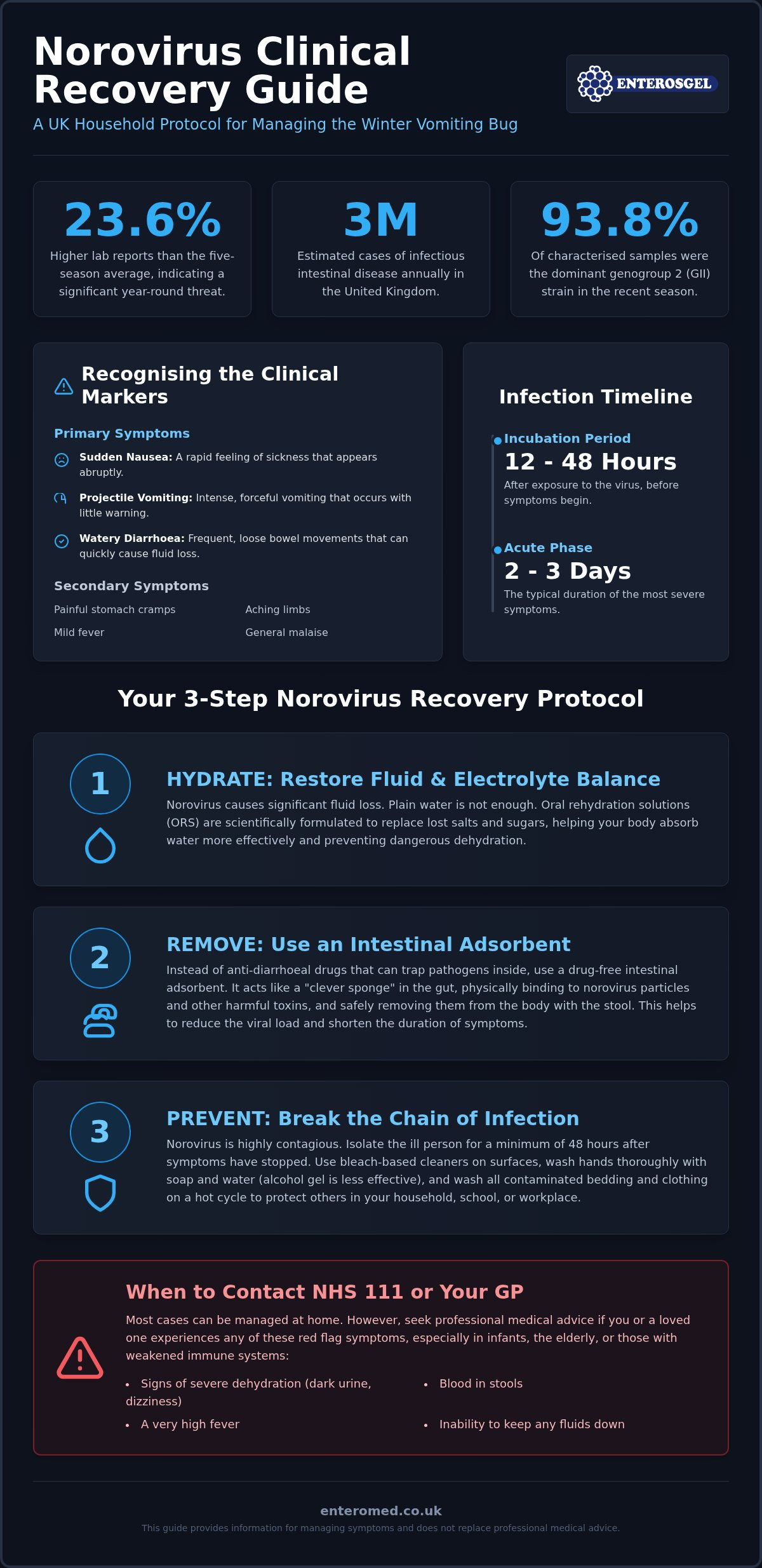
Norovirus is an exceptionally resilient and highly contagious virus. It serves as the primary cause of acute gastroenteritis in the United Kingdom, accounting for an estimated 3 million cases of infectious intestinal disease annually. For a detailed Norovirus overview, clinical data confirms it spreads rapidly through the faecal-oral route, often via contaminated surfaces or close personal contact. Unlike a standard stomach upset, the onset is characteristically sudden and can feel quite overwhelming.
The primary clinical markers of an infection include:
- Sudden nausea: A rapid feeling of sickness that often precedes vomiting.
- Projectile vomiting: Intense, forceful vomiting that occurs with little warning.
- Watery diarrhoea: Frequent, loose bowel movements that can quickly lead to fluid loss.
Secondary symptoms may also manifest, such as painful stomach cramps, aching limbs, and a mild fever. The typical UK timeline follows a predictable pattern. After an initial incubation period of 12 to 48 hours, the acute phase usually lasts for two to three days. Whilst the symptoms are short-lived for most, the physical toll on the body is significant.
Why Norovirus is More Than Just a Winter Bug
The moniker "winter vomiting bug" exists because cases traditionally peak during colder months when people congregate indoors. However, recent data from July 2026 showed positive laboratory reports were 23.6% higher than the five-season average, proving it's a significant year-round threat. This persistence is partly due to the dominance of specific genotypes, such as genogroup 2 (GII), which accounted for 93.8% of characterised samples in the early 2026/2027 season. Schools, hospitals, and workplaces provide ideal environments for these strains to circulate amongst the population regardless of the external temperature.
When to Contact NHS 111 or Your GP
Most individuals can manage their recovery at home by following a structured norovirus symptoms treatment UK protocol. However, medical intervention is necessary if signs of severe dehydration appear. You should monitor for dark-coloured urine, persistent dizziness, or a significant reduction in how often you pee. These are clear indicators that the body's fluid levels are dangerously low.
Seek advice from NHS 111 or your GP if you experience red flags such as blood in your stools, a very high fever, or an absolute inability to keep down any fluids. Infants, the elderly, and those with weakened immune systems are particularly vulnerable to rapid dehydration and may require professional clinical support to ensure a safe recovery.
The Physiological Impact: How Norovirus Disrupts the Gut
Once ingested, the virus binds to the lining of the small intestine. It replicates rapidly within the enterocytes, which are the cells responsible for nutrient absorption. This invasion triggers a robust inflammatory response. As a result, the intestinal villi, the tiny, finger-like projections in your gut, become blunted. This significantly reduces the gut's ability to absorb water and electrolytes. Understanding this biological disruption is key to choosing an effective norovirus symptoms treatment UK strategy.
This malabsorption creates an osmotic imbalance, forcing the body to secrete excess fluid into the bowel. This fluid secretion causes the characteristic watery stool. The sheer volume and speed of this process create the intense "urgency" patients feel. Even after the acute phase passes, viral shedding continues. Research indicates that individuals can shed billions of viral particles in their stool for several weeks. This is why the 48-hour isolation rule in the UK is a minimum requirement, not a suggestion.
The Mechanism of Diarrhoea and Vomiting
The infection compromises the integrity of the gut barrier, leading to what is often described as "leaky" intestinal walls. This structural disruption allows toxins and fluids to move freely across the membrane, exacerbating the condition. Vomiting acts as the body's primary defensive reflex to expel the pathogen from the upper gastrointestinal tract before it can cause further damage. The presence of viral particles irritates the enteric nervous system, sending rapid signals to the brain that trigger the characteristic urgency of gastroenteritis.
Pathogen Removal vs. Symptom Suppression
When seeking a norovirus symptoms treatment UK households often reach for standard anti-motility drugs. Whilst these medications can stop the physical movement of the gut, they carry a clinical risk. By halting bowel contractions, you effectively trap the virus and its associated toxins inside the digestive tract. This can prolong the infection and delay the natural healing of the intestinal lining.
A more logical clinical approach involves the physical removal of the viral load. Using an intestinal adsorbent allows you to bind the pathogens and escort them out of the body naturally. This method supports the body's own defence mechanisms without interfering with the gut's motility. For those managing a recovery at home, choosing a certified medical device like Enterosgel can provide a safe way to target the root cause of the distress.
Clinical Management at Home: Hydration and Electrolytes
Effective norovirus symptoms treatment UK protocols prioritise the immediate replacement of lost fluids and essential minerals. While the urge to drink large quantities of plain water is natural, doing so can inadvertently dilute the body's remaining sodium and potassium levels. During acute gastroenteritis, the gut's ability to absorb water is compromised. It requires a specific balance of glucose and salts to facilitate the transport of water across the intestinal wall. This is why medical-grade rehydration is a clinical necessity rather than an optional supplement.
You should avoid sugary carbonated drinks and fruit juices during the peak of the infection. The high sugar content in these beverages can actually draw more water into the bowel, worsening the diarrhoea. If you are struggling with active nausea, the best approach is to take small, frequent sips of fluid every five to ten minutes. Using a teaspoon or a straw can help control the volume and prevent the stomach from reacting to a sudden influx of liquid.
Using Oral Rehydration Salts (ORS) Effectively
Oral rehydration salts are formulated to match the body's electrolyte requirements precisely. Unlike standard sports drinks, which often contain excessive sugar and insufficient sodium, ORS packets provide the exact ratio needed for cellular rehydration. For babies and toddlers, you should offer small amounts of fluid frequently, even if they are still breastfeeding or taking formula. Monitoring hydration is straightforward. You should look for pale, straw-coloured urine. If the urine becomes dark or infrequent, it's a clear sign that fluid intake needs to increase immediately.
Dietary Steps for Post-Vomiting Recovery
You don't need to rush back to a full diet. It's best to wait for a genuine "hunger cue" once the vomiting has ceased for several hours. When you feel ready, choose bland, low-fibre foods that are gentle on the recovering intestinal lining. Plain pasta, white rice, and boiled potatoes are excellent initial choices because they are easy to digest. Avoid dairy products, caffeine, and fatty meals for at least 48 hours after your symptoms stop. These substances can irritate the gut and may trigger a relapse of discomfort whilst the digestive system is still in a sensitive state.
A Step-by-Step Protocol for Norovirus Recovery and Spread Prevention
When norovirus strikes, the speed of your response determines the severity and duration of the ordeal. Step 1 is immediate isolation. At the first sign of nausea, you should retreat to a separate room and begin small-sip hydration to stabilise your system. Step 2 involves active pathogen clearance. Using a drug-free intestinal adsorbent helps your body physically export the virus rather than simply waiting for the infection to run its course. Step 3 focuses on household protection through rigorous hygiene. Finally, Step 4 requires strict adherence to the 48-hour rule. You must remain at home until a full 48 hours have passed since your last bout of vomiting or diarrhoea to prevent community transmission.
This 48-hour window is a clinical baseline. Even if you feel energetic, your body is still actively shedding the virus, making you a hidden risk to colleagues and classmates. Following this structured norovirus symptoms treatment UK protocol ensures you don't become a link in a local outbreak chain.
The Critical Rule: Soap and Water vs. Alcohol Gel
Alcohol-based hand sanitisers often fail against norovirus because they cannot penetrate the virus's tough protein shell. You must use soap and warm water. The physical friction of rubbing your hands together for at least 20 seconds is what actually rinses the viral particles away. For surfaces, standard kitchen cleaners are often insufficient. Use a bleach-based solution for high-touch areas like door handles, light switches, and toilets to neutralise the virus effectively and protect other members of your household.
Preparing Your Home First Aid Kit
An effective norovirus symptoms treatment UK strategy relies on being prepared before the bug enters your home. Your domestic medical cupboard should mirror a clinical travel first aid kit for stomach problems by including a high-performance toxin binder. Having an adsorbent ready allows you to start treatment at the very first symptom. This is crucial for reducing the overall viral load in the gut before it peaks. This level of preparation is also vital for journeys. Knowing how to stop diarrhoea before a long flight can prevent a minor infection from becoming a travel emergency. You can purchase Enterosgel online to ensure your first aid kit is ready for the next outbreak.
Enterosgel: A Safe, Drug-Free Solution for Norovirus Relief
Enterosgel represents a clinical advancement in norovirus symptoms treatment UK by addressing the infection at its source. It acts as a "clever sponge," using a physical mechanism of action to target pathogens. Unlike medications that are absorbed into the bloodstream, this medical device remains within the intestinal tract. It works through adsorption, which is the process of binding viruses and toxins to its surface, rather than absorption, where substances are soaked up into the body's internal systems. This ensures the viral load is physically trapped and removed from the body.
This non-systemic nature ensures that the gel is not metabolised by the liver or kidneys. It simply travels through the gut, collecting harmful particles, and is excreted naturally with the stool. Clinical evidence gathered over 30 years demonstrates that this physical removal of the viral load significantly reduces the duration of acute diarrhoea. By clearing the cause of the irritation, the intestinal lining can begin the healing process more rapidly without the risks associated with chemical symptom-suppressants.
Safe for the Whole Family: From Infants to the Elderly
The safety profile of this drug-free medical device makes it suitable for all age groups, including infants from birth (0+) and pregnant or breastfeeding women. Children often have sensitive systems that may react poorly to complex chemical formulations. A physical adsorbent provides a gentle alternative that doesn't interfere with the body's natural processes. Administration is straightforward. The gel is completely tasteless and can be mixed into water or an oral rehydration solution (ORS) without altering the flavour, making it easier for those experiencing nausea to consume.
Choosing Your Format: Tubes and Sachets
To ensure you're prepared for an outbreak, Enterosgel is available in several formats tailored to different needs. The 225g tube is the standard for home use, providing enough volume for a full course of treatment for multiple family members. It's also an essential tool for those seeking irritable bowel syndrome relief UK wide, as it helps manage chronic digestive sensitivities alongside acute infections.
For those who need to maintain their norovirus symptoms treatment UK protocol whilst on the move, portable sachet packs are available. These are ideal for keeping in a desk drawer or travel bag, ensuring you can begin pathogen clearance the moment symptoms appear. For more detailed information on how this medical device supports long-term digestive wellness, you can explore our guide on Enterosgel for gut health.
Take Control of Your Clinical Recovery
Managing a norovirus outbreak requires a methodical approach that prioritises both electrolyte stability and the physical removal of the pathogen. You now understand that while oral rehydration salts are essential for physiological balance, addressing the root cause through adsorption provides a more direct path to relief. By adhering to the 48-hour isolation rule and maintaining rigorous hand hygiene with soap and water, you can effectively break the cycle of infection and protect your household.
Implementing a structured norovirus symptoms treatment UK protocol doesn't have to be complex. Enterosgel offers a drug-free, non-systemic solution that has been clinically proven for over 30 years. It's safe for the whole family, including children from birth (0+), and is recommended by UK healthcare professionals as a reliable tool for intestinal health. You can order Enterosgel for fast, drug-free norovirus relief to ensure your home first aid kit is prepared for the next bug. With these clinical strategies in place, you can navigate your recovery with confidence and return to your daily routine safely.
Frequently Asked Questions
How long does norovirus typically last in the UK?
Most people in the UK find that the acute phase of norovirus lasts between 12 and 60 hours. While the most intense vomiting typically subsides within the first 24 hours, diarrhoea may persist for slightly longer as the gut lining recovers. It is a self-limiting virus, meaning the body clears it without antibiotics. However, feeling fatigued or "washed out" can last for several days after the physical symptoms have ceased.
Is norovirus the same as "stomach flu"?
No, norovirus is not related to the influenza virus. The term "stomach flu" is a common misnomer used in the UK to describe acute gastroenteritis. While both conditions can cause fever and body aches, influenza primarily affects the respiratory system. Norovirus specifically targets the gastrointestinal tract, causing significant inflammation in the stomach and small intestine. Understanding this distinction helps in selecting the correct clinical approach for recovery.
Can I take Imodium for norovirus symptoms?
Clinical advice often cautions against using anti-motility drugs like Imodium during an active norovirus infection. These medications work by slowing down the gut's movement, which can inadvertently trap the virus and its toxins inside your digestive system. This may prolong the duration of the illness. A more effective norovirus symptoms treatment UK strategy involves using an intestinal adsorbent to physically remove the pathogens while allowing the gut to maintain its natural clearance process.
Why doesn’t hand sanitiser work against norovirus?
Alcohol-based hand sanitisers are largely ineffective because norovirus is a non-enveloped virus. It lacks the lipid envelope that alcohol typically disrupts to kill germs. Instead, the virus is protected by a sturdy protein shell called a capsid. The most reliable way to remove these particles is through thorough handwashing with soap and warm water. The physical action of scrubbing for 20 seconds effectively detaches the virus from your skin and rinses it away.
Is Enterosgel safe for babies and toddlers with norovirus?
Yes, Enterosgel is a drug-free medical device that is safe for infants from birth (0+) and toddlers. Because it is not absorbed into the bloodstream, it doesn't place a metabolic burden on a child's developing liver or kidneys. It works by physically binding to the viral particles in the gut. Parents can easily mix the tasteless gel into water or an oral rehydration solution, making it a gentle option for young children with sensitive systems.
How long am I contagious after norovirus symptoms stop?
You remain highly contagious for at least 48 hours after your last episode of vomiting or diarrhoea. This is why UK health guidelines strictly require staying away from work or school during this window. However, viral shedding in the stool can actually continue for two weeks or more after you feel better. Maintaining high standards of bathroom hygiene and frequent handwashing remains essential long after your physical recovery to protect those around you.
Can norovirus lead to long-term issues like IBS?
Some individuals may develop post-infectious Irritable Bowel Syndrome (PI-IBS) following a severe bout of norovirus. The intense inflammation can disrupt the delicate balance of the gut microbiome and affect the sensitivity of the enteric nervous system. If you notice persistent bloating, cramping, or altered bowel habits weeks after the virus has cleared, it may indicate that your gut requires further support. Using a toxin binder can help manage these lingering symptoms by removing residual irritants.
What is the best thing to drink for norovirus recovery?
The most effective norovirus symptoms treatment UK for hydration is a medical-grade oral rehydration solution (ORS). These drinks contain a precise ratio of salts and glucose that helps the intestines absorb water more efficiently. While plain water is important, it doesn't replace the essential electrolytes lost through vomiting and diarrhoea. You should avoid caffeinated drinks, alcohol, and high-sugar fruit juices, as these can irritate the gut and potentially worsen your symptoms during recovery.
Share this article